Group: Members
Posts: 93
Member No.: 20643
Joined: May 27, 2024
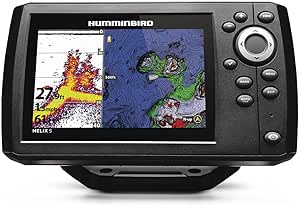
I hope MNR doesn't introduce a lower limit, or slot size re for crappie! Take as many of the invasive buggers as you can imo!. The majority of Kawartha Lake anglers target walleye as their number one target fish of choice, myself included. The black crappie invasion has had major detrimental effects on the remaining walleye fisheries; a fishery that was already facing serious declines since zebras and spiny water flea arrived in the early 80's. Walleye recruitment (age classes 0-1) has sharply declined since crappie arrived. They directly compete with walleye for all forage items that are essential for the initial stages of life. The biomass of their exploding populations in the various lakes is astounding! eg. Lake Scugog - MNR spring index trapnet catches of 3000 - 4500 crappie per 18 hr +/- hours! They are the #1 species by biomass in the fish community now. It's a miracle if the lake has any walleye recruitment remaining. Crappie are sexually mature as early as 3 years in the Kawarthas. They're 9-11 inches in length as early as four years, depending on the lake. They are here to stay now ! Pound as many as you can! Re: forward scan livescope debate - I agree that it's detrimental, esp. to muskellunge. It's to the point now that it's not even fishing anymore. From 100 feet away you can now scan a weed point, identify an individual muskie, actually watch your lure's presentation and assess the fish's reaction to said bait. Ridiculous. It should be banned imo. Good thing most anglers aren't willing to part with $4k to have the technology on their boat.
Group: Members
Posts: 382
Member No.: 20215
Joined: January 27, 2023
QUOTE (Hubbabubba @ Apr 18, 2026 - 11:00 am)
I hope MNR doesn't introduce a lower limit, or slot size re for crappie! Take as many of the invasive buggers as you can imo!. The majority of Kawartha Lake anglers target walleye as their number one target fish of choice, myself included. The black crappie invasion has had major detrimental effects on the remaining walleye fisheries; a fishery that was already facing serious declines since zebras and spiny water flea arrived in the early 80's. Walleye recruitment (age classes 0-1) has sharply declined since crappie arrived. They directly compete with walleye for all forage items that are essential for the initial stages of life. The biomass of their exploding populations in the various lakes is astounding! eg. Lake Scugog - MNR spring index trapnet catches of 3000 - 4500 crappie per 18 hr +/- hours! They are the #1 species by biomass in the fish community now. It's a miracle if the lake has any walleye recruitment remaining. Crappie are sexually mature as early as 3 years in the Kawarthas. They're 9-11 inches in length as early as four years, depending on the lake. They are here to stay now ! Pound as many as you can! Re: forward scan livescope debate - I agree that it's detrimental, esp. to muskellunge. It's to the point now that it's not even fishing anymore. From 100 feet away you can now scan a weed point, identify an individual muskie, actually watch your lure's presentation and assess the fish's reaction to said bait. Ridiculous. It should be banned imo. Good thing most anglers aren't willing to part with $4k to have the technology on their boat.
Not so up to date regarding the crappie invasion you speak of but they are good eating. Electronics though is something of a pet peeve of mine. To each their own however as most use them and it is legal. Myself for better or worse i am old school and don't use any electronics on either soft or hard water. Mostly just me being old and stubborn. Do fine without it and rely on decades of anecdotal knowledge. Works for me but i get it that most don't have access to that anecdotal data.
Group: Members
Posts: 4150
Member No.: 18589
Joined: September 15, 2020
QUOTE (Hubbabubba @ Apr 18, 2026 - 11:00 am)
I hope MNR doesn't introduce a lower limit, or slot size re for crappie! Take as many of the invasive buggers as you can imo!. The majority of Kawartha Lake anglers target walleye as their number one target fish of choice, myself included. The black crappie invasion has had major detrimental effects on the remaining walleye fisheries; a fishery that was already facing serious declines since zebras and spiny water flea arrived in the early 80's. Walleye recruitment (age classes 0-1) has sharply declined since crappie arrived. They directly compete with walleye for all forage items that are essential for the initial stages of life. The biomass of their exploding populations in the various lakes is astounding! eg. Lake Scugog - MNR spring index trapnet catches of 3000 - 4500 crappie per 18 hr +/- hours! They are the #1 species by biomass in the fish community now. It's a miracle if the lake has any walleye recruitment remaining. Crappie are sexually mature as early as 3 years in the Kawarthas. They're 9-11 inches in length as early as four years, depending on the lake. They are here to stay now ! Pound as many as you can! Re: forward scan livescope debate - I agree that it's detrimental, esp. to muskellunge. It's to the point now that it's not even fishing anymore. From 100 feet away you can now scan a weed point, identify an individual muskie, actually watch your lure's presentation and assess the fish's reaction to said bait. Ridiculous. It should be banned imo. Good thing most anglers aren't willing to part with $4k to have the technology on their boat.
You have nothing to worry about, the MNR has no plans on changing the crappie regulations. That was just my observation/suggestion on crappie regulations. I have also said on previous posts to drop the walleye limit to two fish, instead of four. You are very close on your crappie numbers in the Kawartha Lakes region. Crappie actually start spawning in the Kawarthas just shy of 4 years old, at a length of approximately 10 inches. That is why I chose under 11 inches and over 13 inches to be released. As for the walleye decline, that started in the 1970's. Over fishing, loss/destruction of habitat, loss of spawning areas, pollution, and man made frequent water level fluctuations. All of these examples have not improved in over 50 years. The zebra mussels and spiny water flea were not in the Kawarthas until the early 90's. As for the crappie, they arrived in the Kawarthas in the 90's as well. Why not blame the large mouth bass and perch for the decline in the walleye population. There are more bass and perch in the Kawarthas than any other predator species. All fish compete with each other, all fish species fluctuate in numbers naturally. It is us that cause the decline in many fish populations. People were worried about the walleye and muskie populations in Balsam Lake. Around 25 years ago we were aware of the pike invasion of Balsam Lake. Since then we have caught the same percentages of walleye and muskie. Pike became a bonus fish for those who like to eat pike. My friends and I have noticed much better fishing in the Kawarthas over the last 10 years...in all the species we target. I have posted hundreds of pictures, caught thousands of fish on multiple Kawartha Lakes from multiple areas of those lakes. You seem to do alright fishing, judging from your walleye posts last year. I really don't see any detrimental effects on the remaining walleye fisheries, as you stated. Not from crappie or any other fish species in the Kawartha Lakes. As for over fishing, pollution, and loss of spawning habitat...Like I said, that is the fault of man and his progress. Greed is always the root cause in the decline of a fish species and the destruction of the environment. History has shown and proved that fact...over and over and over and over again.
Group: Members
Posts: 93
Member No.: 20643
Joined: May 27, 2024
Dug out some old notes from when I used to do a lot of fish bioinventory work on a few of the Kawartha Lakes. Worked on Scugog quite a bit 1981-89, Sturgeon 1984-2012, Buckhorn and Lower Buckhorn 2013-2021, some work on Balsam, Canal, etc. It's amazing how much the lakes have changed in those years! I saw the arrival of bluegill, pike, and black crappie in the system, and the profound changes that occurred when the zebras and spiny water flea arrived. Through access to archival pre-FAU data (old district fisheries data from the 1940's - 1970's), plus the findings from all the collected data from the various inventories conducted (FWIN Fall Walleye Index Netting) , SLIN (Spring Littoral Index Netting), NSCIN (Nearshore Community Index Netting), ESTN (Early Spring Trap Netting), BSM (Broadscale Monitoring). Here's what I've seen:
- the old netting data from the 40's - 70's shows the typical population boom with walleye numbers initially very high after the 1930's-1940 stockings, then tapering off to lower numbers by the early to mid 70's. Spawning and recruitment was not an issue. - first black crappie showed up in Simcoe in 1987. It didn't take long! They were in Canal by 1989, then Balsam in 1990. First specimens showed up in Sturgeon in 1993 (3). The buggers were working their way in from the east as well, via the Otonabee/Trent Canal. - zebras hit Ontario in 1986. Lake St. Clair in 1986. They were well established when they were found, hinting that the initial ballast intro had happened in 82-83 period. Didn't take long to spread, probably thanks to boat transfer and waterfowl (can carry velligers on their body). - first zebras in Sturgeon Lake 1988 down by Muskrat Island (attached to native mussels) - zebra explosion 1989-90 ! Massive impact. Light transparency tripled in less than four years. Walleye responded by moving inshore into the littoral zone weedbeds. Fishing success was off the charts ! The fish were all concentrated in 6-12 feet of water in the weedbeds. The population got pounded! Our native mollusc community almost vanished in about eight years due to the zebras. First spiny water flea hits 1989 (captured in plankton tows). Entire primary productivity plummets due to zebra water filtration and predation of zooplankters by spiny water flea. Comparision between pre-zebra plankton samples and 2004-2006 samples - zooplankter community diversity declined by over 50 %. Entire species now gone. Biomass (plankters per liter) declined as well. - diet study showed direct competition between black crappie and all other early life stages of multiple fish species. Age class 0 walleye also in crappie stomachs. - was interesting to compare condition of walleye from the 70's to mid-2000's. Age at weight had a big decline. Age at maturity, esp. for female walleye, increased by at least two years! - to give you an idea how walleye biomass has changed - Sturgeon Lake 1983 trap netting - average catch per six foot net for 18 hr. set = 279 walleye per set over 86 sets. 1998 - now 21 walleye per set (only four crappie caught). By 2008 - walleye down to 2.6 per set. Black crappie population explosion. By 2012 - walleye down to 2.0 per set. Very few young 3-5 year old fish . - crappie are short lived. Oldest are only 7 yrs by otolith and scale age (sample of over 4000 fish). 68% of the males spawn at 3 when they are about 9 inches long. 42% of females spawn at 3.
Group: Members
Posts: 32
Member No.: 18233
Joined: March 14, 2020
@Hubbabubba This is awesome - thank you so much for taking the time to dig out those old notes and share such detailed information with us. It's clear MNR put in a tremendous amount of long-term monitoring work across the Kawarthas, but it's not always easy for the public to access or digest. Really appreciate you laying it all out like this.
Quick question for you: During those studies (especially on Balsam Lake), did you collect any similar data on muskies? I'm particularly interested in any observed impacts from the pike intrusion/expansion.
@crappeeeman has mentioned that musky numbers in Balsam don't appear to have changed significantly, but here's one interesting data point from the Muskies Canada angler log program (available to participating members). It shows the average hours needed to land a musky on Balsam Lake, based on logs going back to 1995. There's a pretty clear upward trend in effort required:
Group: Members
Posts: 4150
Member No.: 18589
Joined: September 15, 2020
So Hubb...I do thank you for your input. You just wrote out what I already said. We were there when the walleye fishing fell apart in the 70's. Long before these invasive fish, mussels, fleas and invasive plants showed up. We were there and saw the mussels come in the 90's and the water fleas 90's and the crappie 90's. I did not have to look up, what I saw as a child/teenager/adult. Clothes lines filled with fish from over fishing. Not just walleye, there was trout, musky, whitefish etc. etc. I did not have to look up seeing pollution everywhere fueled by progress, I was there. No one is disputing what you have taken the time to write down. But this crisis started long before anyone cared to do anything about it. All the examples you have acknowledged are definitely not helping, but are not the root cause. Just thought to let you know, crappie are not short lived at all... in cooler climates. Crappie grow to massive size here in Ontario, Manitoba and Quebec. Those monster crappie live until a ripe old age, some passing 16 years old. I have posted dozens and dozens of huge crappie photos. Also male spawning age is non applicable as they reach maturity earlier than females. 80% of female crappie do not spawn until they are almost 4 years old at approximately 10 inches. The percentage you have is around 20% off, because of a false first spawn in females around 3 years old.. On a better note that hopefully continues in the future, there is this. Like I have said in many previous posts. My friends/anglers and myself have noticed better fishing of all species in the Kawartha Lakes in the last ten years. This includes walleye and muskie. Thanks again for your effort in looking up some stats, but statistics change all the time. Nature is consistent, man is inconsistent, and so is his mathematics.
Group: Members
Posts: 4150
Member No.: 18589
Joined: September 15, 2020
QUOTE (pjfishing @ Apr 19, 2026 - 12:26 pm)
@Hubbabubba This is awesome - thank you so much for taking the time to dig out those old notes and share such detailed information with us. It's clear MNR put in a tremendous amount of long-term monitoring work across the Kawarthas, but it's not always easy for the public to access or digest. Really appreciate you laying it all out like this.
Quick question for you: During those studies (especially on Balsam Lake), did you collect any similar data on muskies? I'm particularly interested in any observed impacts from the pike intrusion/expansion.
@crappeeeman has mentioned that musky numbers in Balsam don't appear to have changed significantly, but here's one interesting data point from the Muskies Canada angler log program (available to participating members). It shows the average hours needed to land a musky on Balsam Lake, based on logs going back to 1995. There's a pretty clear upward trend in effort required:
Best, Peja
Good day...I actually said that we have caught the same percentages of walleye and muskie on Balsam Lake. And did add that the fishing has been much better for all species, in the last ten years. I like your posts pjfishing. I know you have commented on mine. If there is anything I could assist, maybe with increasing your muskie numbers on Balsam, just let me know. No more than I have tried to help anyone else of course. There are a few things you might find interesting.
Group: Members
Posts: 93
Member No.: 20643
Joined: May 27, 2024
The only dedicated muskellunge work done by the Kawartha Lakes Fisheries Assessment (KLFAU) that I know of was the long term Scugog study that was run by Dave Wood in the 70's, 80's, and possibly 90's. The trap and fyke nets were always set at the #7 causeway tunnels and he did an excellent job to manage stress and health of the fish. The boat had water pump troughs on it and MS222 anesthesia tanks for "putting the fish to sleep" during all processing. He was a top-notch dude to work with.
I'm sure there would be trend with time netting data for Balsam as it's a designated "type lake" in the unit and has received a lot of inventory. There will be decades of ESTN (early spring trap netting) data, probably back to the 70's. Possibly BSM (broadscale monitory - mortality sampling with gill nets). All of this data is available for public viewing. You'd just have to call the FAU and set up an appointment. The head tech is still George Cimbura if I'm correct. Call district office in Peterborough and they can give you the number. You may have to get a memory stick copy of the software if you're going to do a lot of data queeries. The software is called "FISHNET" (probably version 10 by now). The government main frame also has what's called "FISHLIB" which is the provincial fisheries archive that holds all of the FAU surveys. I'm sure all of the Balsam inventories would be in FISHLIB. Perhaps the FAU can electronically send you the files.
It's been know from both research and experience that pike and muskellunge do not coexist well in small inland waters like the Kawartha Lakes. Hate to say it, but a world class muskellunge fishery is now in the process of death. A shame, as it's existed naturally for as long as recorded history exists. Large waterbodies are a different story eg. St. Lawrence R, Georgian Bay, etc. The spatial thing comes in to play and the two species can coexist. IMO, the writing is on the wall, now that Balsam is infested. It's the headwater lake at the highest elevation. An easy spread downhill now for the expansion. If I think of my own personal angling experience, Baptiste and Elephant Lakes are classic examples of what happens to a muskellunge fishery when pike arrive. I fished these lakes non-stop as a kid in the 70's and early 80's. It was a phenomenal muskie fishery ! Better than any Kawartha Lake that I've fished. It was insane. As a teen you could honestly land four or five fish in maybe five ours of casting. We never trolled back then. Beautiful fish. Lots in the 12-16lb class. Then some peckerhead decided to illegally throw some pike in there from the York River. It took about a decade, but now the muskie are gone. So sad.
Group: Members
Posts: 93
Member No.: 20643
Joined: May 27, 2024
Sorry CrappieMan, but some of what you're saying doesn't give with both my observations, or the FAU data. If you manage to get the FISHLIB data you'll see what I mean. FISHNET survey folders will have detailed fish attribute files where you can view all the fish meristics - every generated scale envelope has been entered (species, TLEN (total length), FLEN (fork length), weight in grams, and it will indicate what "aging" structures were taken (spine, scale, ray, otolith). A sub-sample of this would have been sent away to a provincial assessor who knows how to do age assessment. They try to use the same person every year. The most accurate ages will be from mortality samples, as both the scales and otoliths would have been used in most cases.
I was involved in the prep and age assessment interp of literally thousands of black crappie from the NSCIN surveys on Sturgeon Lake 1998-2012, as well as Lower Buckhorn Lake (2013-2021). This species is an easy one to interpret, as they are extremely fast growing and short lived. I can tell you that I've never seen data indicating ages in excess of 7 years in either of these lakes. Even the largest sampled specimens never exceeded this age (14 and 15 inchers that were 1.7 - 2.4 lbs). The oldest black crappie population data set that I've ever viewed was for Northwestern Ontario - Rainy Lake and Lake of The Woods. A small number of their largest crappie were 9 yrs old). A 16 year old crappie? - I doubt it. I smell age assessment interp error. If you have a source for this I'd like to see it.
Re: Age of sexual maturity - as previous post, for Sturgeon and L. Buckhorn Lakes, the 68% male and 42% female crappie sexually mature at age 3 is based on full mort-sampled fish that were age assessed by scale and otolith. In spring - freely milting males with enlarged white testes, females with mature viable eggs, ovary not in skein (eggs loose in the abdominal wall). I've never read anything in the literature about "false spawn" in crappie. Where did you get this info from. I tried google but I couldn't find anything.
Group: Members
Posts: 93
Member No.: 20643
Joined: May 27, 2024
Largest black crappie I ever saw were usually from Sturgeon Lake. I did see one fish over 3 pounds on L. Buckhorn. I remember getting a radio call from a netting crew set off Ball Point on Sturgeon (the point that juts out by LongBeach). They asked me if I'd ever seen a 17" crappie before. I called BS and went over to see the fish, which had been transferred into a floating fish cage. I almost soiled myself! They had four crappie that were 15-17 inches. The biggest was literally 40cm and if I remember correctly it was 3.24lb when I figured out grams to pounds. The other two were 2.5-2 3/4lbs.
Group: Members
Posts: 4150
Member No.: 18589
Joined: September 15, 2020
QUOTE (Hubbabubba @ Apr 19, 2026 - 04:11 pm)
Largest black crappie I ever saw were usually from Sturgeon Lake. I did see one fish over 3 pounds on L. Buckhorn. I remember getting a radio call from a netting crew set off Ball Point on Sturgeon (the point that juts out by LongBeach). They asked me if I'd ever seen a 17" crappie before. I called BS and went over to see the fish, which had been transferred into a floating fish cage. I almost soiled myself! They had four crappie that were 15-17 inches. The biggest was literally 40cm and if I remember correctly it was 3.24lb when I figured out grams to pounds. The other two were 2.5-2 3/4lbs.
So you responded to my post with all this data. I thanked you for your input, complimented you on your research. I said you were very close on your numbers for crappie. Your opinion was formed from the conclusions of the data you referenced. The same netting studies could be done on each Kawartha lake. I am sure the results would be similar within and inch or so either way on size. The same as first spawn for crappie may be similar. As for my "false spawn" wording. It means many fish experience an enormous amount of stress coinciding with their first spawn. Poor water quality, size of fish, spawning environment, can contribute to eggs that are not viable. So the second crappie spawn, just shy of 4 years old is more accurate. Your last post you mention these 4 very large crappie and your shock to see a crappie that size. My biggest crappie was on Balsam Lake measuring 17.5 inches and weighing 2.6 pounds. It was caught September 25 2014. If it had been caught in the spring and was full of eggs, it may have broken the Ontario crappie record. The record being 17 inches 3.78lbs. Which I am still chasing. I catch huge crappie every year and post all the pictures. Some of these crappie take over a decade and more to get that big, depending on their food source and how long each winter is. You can bet if I break the record say 18 inches and 4.5 lbs....That fish will be 16 years old. What your studies don't tell you is there are many schools of crappie roaming the lakes. Large schools have dozens and dozens smaller crappie, hundreds sometimes. Huge crappie travel in a school with as few as 5 to 10 fish. They spawn on shorelines and in creeks and rivers like walleye. Some spawn in the normal areas like smaller crappie. There are exceptions to every fish study, no two lakes are the same. Different areas of lakes are never the same. Water flow, sources of food, depth and size of the lake. No two schools of crappie are the same, big crappie lay double or even triple the amount of eggs giving the hatch a better chance at survival. These bigger crappie grow slower and live longer in the colder, shorter growing seasons in Ontario, Manitoba and Quebec. Nothing beats real time results, too bad they can't study all the fish all the time, from spawn to spawn. Thanks again for the conversation, I do appreciate other perspectives on fishing topics.
Group: Members
Posts: 4150
Member No.: 18589
Joined: September 15, 2020
QUOTE (Hubbabubba @ Apr 19, 2026 - 03:55 pm)
Sorry CrappieMan, but some of what you're saying doesn't give with both my observations, or the FAU data. If you manage to get the FISHLIB data you'll see what I mean. FISHNET survey folders will have detailed fish attribute files where you can view all the fish meristics - every generated scale envelope has been entered (species, TLEN (total length), FLEN (fork length), weight in grams, and it will indicate what "aging" structures were taken (spine, scale, ray, otolith). A sub-sample of this would have been sent away to a provincial assessor who knows how to do age assessment. They try to use the same person every year. The most accurate ages will be from mortality samples, as both the scales and otoliths would have been used in most cases.
I was involved in the prep and age assessment interp of literally thousands of black crappie from the NSCIN surveys on Sturgeon Lake 1998-2012, as well as Lower Buckhorn Lake (2013-2021). This species is an easy one to interpret, as they are extremely fast growing and short lived. I can tell you that I've never seen data indicating ages in excess of 7 years in either of these lakes. Even the largest sampled specimens never exceeded this age (14 and 15 inchers that were 1.7 - 2.4 lbs). The oldest black crappie population data set that I've ever viewed was for Northwestern Ontario - Rainy Lake and Lake of The Woods. A small number of their largest crappie were 9 yrs old). A 16 year old crappie? - I doubt it. I smell age assessment interp error. If you have a source for this I'd like to see it.
Re: Age of sexual maturity - as previous post, for Sturgeon and L. Buckhorn Lakes, the 68% male and 42% female crappie sexually mature at age 3 is based on full mort-sampled fish that were age assessed by scale and otolith. In spring - freely milting males with enlarged white testes, females with mature viable eggs, ovary not in skein (eggs loose in the abdominal wall). I've never read anything in the literature about "false spawn" in crappie. Where did you get this info from. I tried google but I couldn't find anything.
You don't have to say sorry, or some of what I am saying doesn't give with your observations. I am quite confident in what I posted. You did say that 42% of female crappie are sexually mature at age 3.... So then the other 58% of the female crappie don't become sexually mature until they are between 3 and 4 years old. Like I stated earlier, 10 inches in length and just shy of 4 years old, in the Kawartha Lakes. I never contribute to a post unless I am sure of what I am posting. Like I said a few times already, the numbers are very close. No need for anyone to say the other is wrong, or in error.
Group: Members
Posts: 99
Member No.: 17693
Joined: December 05, 2019
i have fished the atonabe river north of rice lake for years an years i used to catch a musky almost every week an lots of walleye my best dat was 8 walleye in one day than about 10 years ago we started to catch pike lots of them last year betyween 3 of us in boat we caught around 30 pike a lot of small ones an since we started to catch pike the walleye thinned down a couple a day than maybe one a day an last year maybe 3 or 4 all summer i think the pike drove them out also i have not caught a musky in the last 3 years an i used to catch like i said one a week before the pike showed up so it lookes like the pike have taken over the atonabe river an rice lake it has been crap the last couple of years except for pike an bass
Group: Members
Posts: 1912
Member No.: 15807
Joined: March 11, 2018
All very interesting to say the least. All very complicated to figure out as well with each lake being different and species behaving differently when other species are around. The thing that I have never understood is that IF the MNR is always very concerned about invasive species, then why do they close the season on fishing for certain species and have catch/keep limits in lakes where the those species are clearly newly invasive/introduced and really should be wanting to get rid of them as quickly as possible? Why not just let it be a free-for-all for those invasive species? I understand in some cases, there will be an issue with OOS catches of species they really want to protect but there must be some way to allow people to fish for and keep invasive species without greatly increasing catches of the native species. And I would much prefer the MNR not introduce fish from other lakes to help boost a certain lakes' fish populations....just make their habitat better, reduce fishing pressure and let nature do it's job (it will take much longer but IMO, it's the right way to do things and reduces the chances of messing up things even more...not all resource managers get things right; not all fisheries scientists get things right). Less meddling with the fish and nature but more changing what humans are doing (so poorly) is probably the best path to take in the long run. So I guess I would side with Hubbabubba on letting people take as many invasives as they want (unless the fishing harms other native species at the same time and can't be avoided). If round gobies were really, really delicious and big (BTW, I wouldn't recommend eating them for health reasons), I would hope the MNR would not put a limit or season on them if people started targeting them? So why would this species be any different than crappie, pike, bass, etc. that get into lakes where they did not belong? Just because some people really like these species and not round gobies?
Group: Members
Posts: 228
Member No.: 17603
Joined: September 22, 2019
Hi All,
Dr. Graham Raby (Trent University) is currently looking at Muskie on Stoney Lake as part of the Stoney Lake Telemetry Project.
Before him was Dr. Sean Landsman (Carleton University) heading up the project with a muskie only focus.
If you are interested in Muskie and what's going on in the area, stop by an MCI meeting. We meet the second Wednesday of each month at the Peterborough Legion.
We have raised $1000's for research in our area and continue to fund Muskie Research both locally and across Muskie provinces.
Fishing Kawartha Lakes
Fishing forum for the Kawartha Lakes & Area. Rice Lake, Lake Scugog, Sturgeon Lake, Balsam Lake, Chemong Lake, Buckhorn Lake, Pigeon Lake, Stoney Lake - Fishing Reports, Ice Conditions, walleye, bass, muskie, crappie, perch & more!
Fishing Kawartha Lakes Forum : Fishing Tips, Current Conditions, Fishing Reports & more! Fishing Kawartha Lakes & Area


 Crappie yet?